“
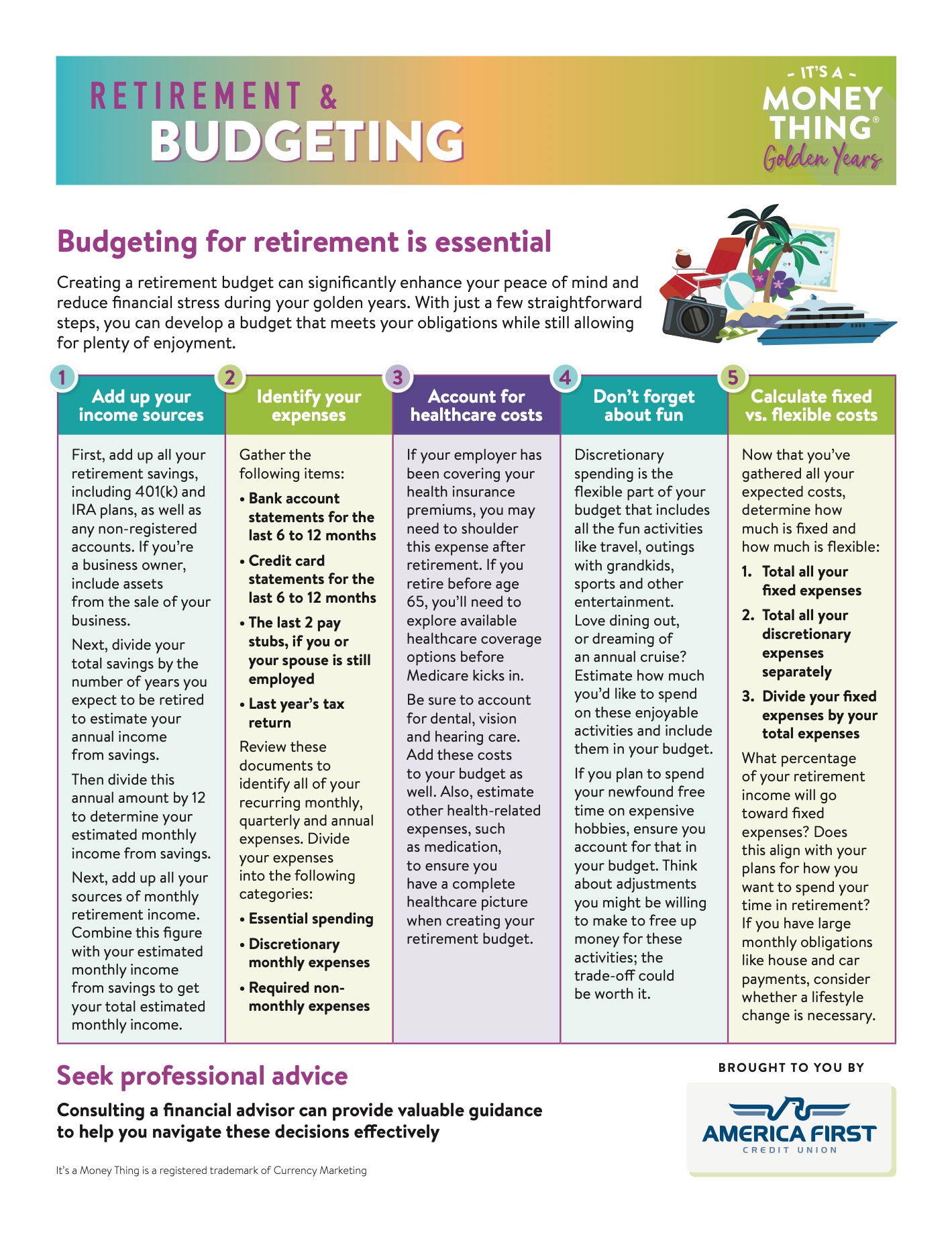
1. Add Up Your Income Sources:
- First, add up all your retirement savings, including 401(k) and IRA plans, as well as any non-registered accounts
- If you’re a business owner, include assets from the sale of your business
- Next, divide your total savings by the number of years you expect to be retired to estimate your annual income from savings
- Then divide this annual amount by 12 to determine your estimated monthly income from savings
- Next, add up all your sources of monthly retirement income, such as company pension plans and Social Security
- Combine this figure with your estimated monthly income from savings to get your total estimated monthly income
- Tracking every source of retirement income will give you a full picture of the budget you’re working with
2. Identify Your Expenses:
- You have the most control over your spending
- In retirement, it might be tempting to dip into your sizable nest egg to start checking items off your bucket list
- However, overspending can be financially risky, since your savings need to last for decades
To create your retirement budget, start by gathering the following items:
- Bank account statements for the last 6 to 12 months
- Credit card statements for the last 6 to 12 months
- The last 2 pay stubs, if you or your spouse is still employed
- Last year’s tax return Review these documents to identify all of your recurring monthly, quarterly and annual payments
Divide your expenses into the following categories:
Essential Spending: This category of spending includes food, clothing, housing, utilities, transportation and healthcare
Discretionary Monthly Expenses: These include things you receive a monthly bill for, including cable TV, streaming services, gym memberships, cellphone plans and other subscriptions
Required Non-monthly Expenses: Bills for property taxes, insurance premiums, auto registration and home warranties may arrive once a year—add up these periodic expenses and divide by 12 to calculate their monthly cost to include in your budget
- Use lined paper or a spreadsheet to account for the timing of expenses
- List the months, January through December, across the top in separate columns; down the left side of the spreadsheet, list each expense on a separate line
- If your utility bill runs an average of $200 a month, put $200 in each monthly column
- For Christmas gifts, if you spend about $500 a year, divide the $500 in two and put half each in November and December
- Do this for each expense item, then find the sum for each month— these are your fixed costs
3. Account for Healthcare Costs:
- If your employer has been covering your health insurance premiums, you may need to shoulder this expense after retirement
- If you retire before age 65, you’ll need to explore available healthcare coverage options before Medicare kicks in
- Shop for plans now to estimate costs, and include this monthly expense in your budget
- Be sure to account for dental, vision and hearing care
- Add these costs to your budget as well
- Also, estimate other health-related expenses, such as medication, to ensure you have a complete healthcare picture when creating your retirement budget
4. Don't Forget About Fun:
- Discretionary spending is the flexible part of your budget that includes all the fun activities like travel, outings with grandkids, sports and other entertainment
- Love dining out, or dreaming of an annual cruise? Estimate how much you’d like to spend on these enjoyable activities and include them in your budget
- Consider how your hobbies and lifestyle might change, as this could impact your spending—if you’re married, have your spouse do the same
- If you plan to spend your newfound free time on expensive hobbies, ensure you account for that in your budget
- Think about adjustments you might be willing to make to free up money for these activities; the trade-off could be worth it
5. Calculate Fixed vs. Variable Costs:
Now that you’ve gathered all your expected costs, determine how much is fixed and how much is flexible:
1. Total all your fixed expenses
2. Total all your discretionary expenses separately
3. Divide your fixed expenses by your total expenses
- What percentage of your retirement income will go toward fixed expenses?
- Does this align with your plans for how you want to spend your time in retirement?
- If you have large monthly obligations like house and car payments, consider whether a lifestyle change is necessary
- If you own a house, think about downsizing to boost your nest egg or moving to an area with a lower cost of living to stretch your money further
- For other expenses, shop around for the best deals, use senior discounts or take on DIY projects instead of hiring help— whatever it takes to increase your financial flexibility
As a general rule, if you want more fun in retirement, find ways to lower your fixed expenses to free up more funds for the activities you enjoy most!
Adjust and monitor regularly:
- Planning isn’t a set-itand-forget-it task: Regularly review and adjust your budget to reflect changes in expenses, market conditions and personal circumstances.
- Annual check-ins can help you stay on track: Remember, the goal is to make your money last as long as you do while enjoying the fruits of your lifelong labor.